Introduction
Texture, consistency, and product stability are important considerations in commercial food manufacturing. From pourable salad dressings to thick sauces and gluten-free bakery products, manufacturers need functional ingredients that help achieve consistent product characteristics across different formulations and production batches.
Xanthan gum is a widely used hydrocolloid that serves as a thickener, stabilizer, and rheology modifier in food applications. Its ability to develop viscosity at relatively low usage levels, perform across a broad range of processing conditions, and interact with other hydrocolloids makes it a versatile ingredient for food formulators.
For food manufacturers, ingredient distributors, and procurement teams, understanding xanthan gum’s functional properties and application requirements is essential when selecting the right grade and establishing a reliable supply.
1. What Is Xanthan Gum?
Xanthan gum is a microbial polysaccharide produced through the fermentation of carbohydrates by Xanthomonas campestris. After fermentation, the product is recovered, purified, dried, and milled into a powder suitable for industrial applications.
In food manufacturing, xanthan gum is primarily used to control viscosity and improve the physical stability of formulated products.
Its important functional characteristics include:
- High thickening efficiency: Develops viscosity at relatively low concentrations, depending on the formulation and required texture.
- Pseudoplastic behavior: Becomes less viscous under shear, supporting pumping, mixing, and pouring.
- Suspension stability: Helps reduce the settling of dispersed particles in liquid food systems.
- Wide pH compatibility: Can function across a broad range of acidic and neutral food formulations.
- Temperature tolerance: Maintains useful thickening performance under many heating and cooling conditions.
- Hydrocolloid compatibility: Can be combined with other gums and stabilizers to achieve specific texture and stability targets.
These properties make xanthan gum suitable for a wide variety of food products where viscosity and consistency need to be controlled.
2. Major Applications of Xanthan Gum in Food Manufacturing
Sauces, Dressings, and Condiments
Sauces and dressings are among the most common applications of xanthan gum.
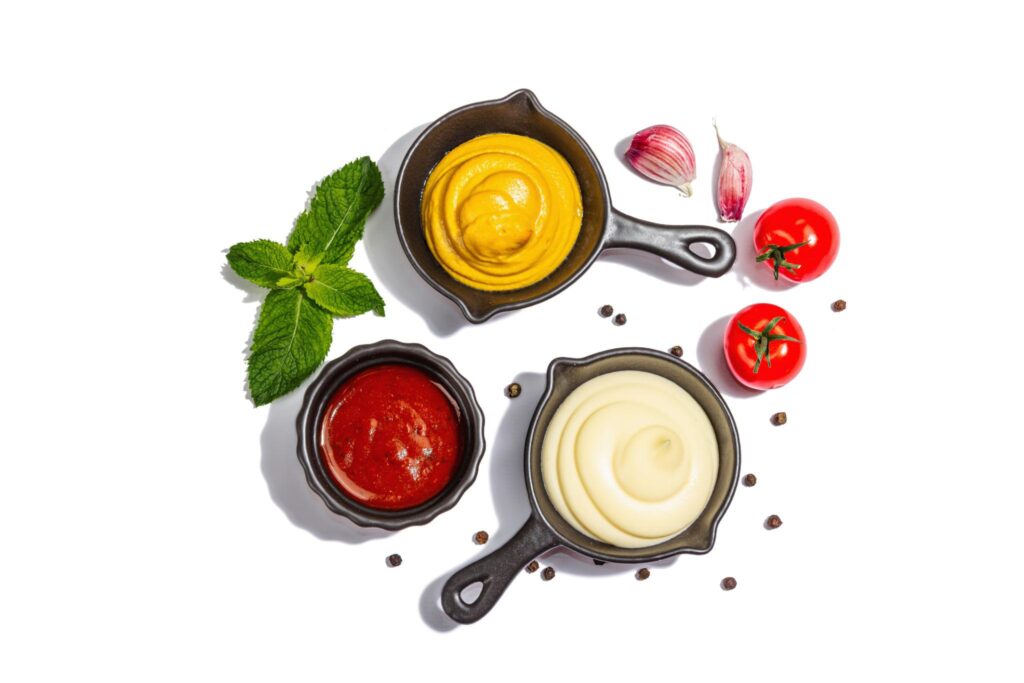
In products such as ketchup, mayonnaise-style dressings, barbecue sauces, and salad dressings, xanthan gum helps build viscosity and maintain a consistent texture. Its shear-thinning behavior allows products to remain thick at rest while becoming easier to pour or dispense during use.
It can also help suspend spices, herbs, and other insoluble ingredients, reducing visible separation during storage.
For manufacturers, the formulation objective is to achieve the desired flow behavior without making the finished product excessively thick or sticky.
Beverages and Fruit Preparations
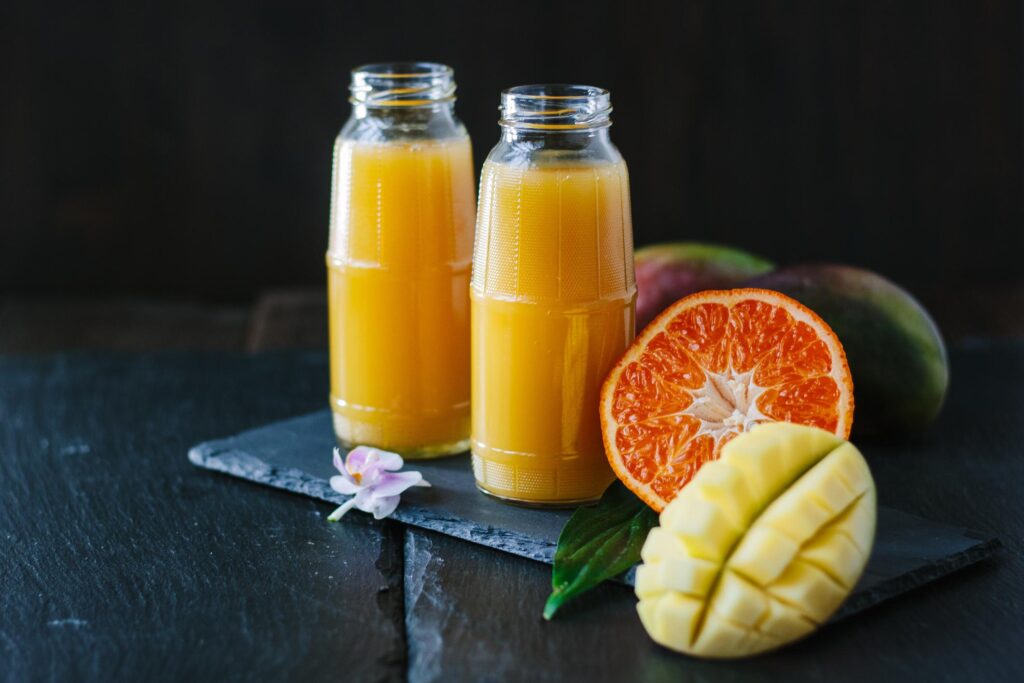
Xanthan gum is used in selected beverage formulations to improve mouthfeel and help suspend pulp, flavor particles, and other dispersed ingredients.
It can be particularly useful in fruit beverages, flavored drinks, and liquid preparations where particle distribution and physical stability are important.
The required viscosity depends on the beverage category. A clear, light beverage may need very different rheological properties from a pulpy fruit drink or a concentrated beverage base.
Formulators should therefore select the appropriate grade and optimize the addition level according to the product’s intended texture and processing conditions.
Dairy Products and Dairy Alternatives
In dairy products and plant-based alternatives, xanthan gum can contribute to viscosity, texture, and physical stability.
Potential applications include:
- Flavored milk beverages
- Yogurt-style products
- Dairy-based sauces
- Plant-based milk alternatives
- Ice cream and frozen desserts
In these formulations, xanthan gum may help improve body and mouthfeel while supporting the suspension of dispersed components.
Its performance depends on the full formulation, including protein content, fat content, pH, processing conditions, and the presence of other stabilizers.
Bakery and Gluten-Free Products
Xanthan gum is particularly relevant to gluten-free bakery formulations.
Traditional wheat dough relies on gluten to provide elasticity and structure. Gluten-free systems do not have the same natural network, so formulators often use hydrocolloids to help improve dough handling and finished-product texture.
Xanthan gum can contribute to water binding, viscosity, and structural support in products such as gluten-free bread, cakes, muffins, and other baked goods.
Its inclusion level needs to be carefully adjusted because excessive viscosity or gum concentration may negatively affect dough handling and final texture.
Processed Foods and Ready-to-Eat Products
Xanthan gum can also be incorporated into gravies, instant food mixes, prepared meals, and other processed food systems.
Depending on the formulation, it may help control consistency, improve ingredient suspension, and maintain a more uniform texture throughout processing and storage.
For manufacturers working with complex formulations, xanthan gum can be evaluated as part of a broader stabilizer system rather than as a standalone ingredient.
3. How Xanthan Gum Works in Food Formulations
Understanding xanthan gum’s rheological behavior helps manufacturers determine where and how it should be used.
Viscosity Development
Xanthan gum hydrates in water and increases the viscosity of the liquid phase. This allows manufacturers to adjust the thickness and flow characteristics of sauces, beverages, and other formulated products.
The final viscosity depends on factors such as concentration, hydration, temperature, pH, salt content, and interactions with other ingredients.
Pseudoplastic Flow Behavior
One of xanthan gum’s most useful properties is pseudoplasticity, also known as shear-thinning behavior.
In practical terms, a sauce containing xanthan gum may remain relatively thick while standing but become easier to pour when shaken, pumped, or squeezed.
This behavior is valuable in commercial food products that need both storage stability and convenient handling.
Suspension and Physical Stability
Xanthan gum can help maintain the distribution of insoluble particles within a liquid system.
This is useful in products containing spices, fruit pulp, flavor particles, or other suspended ingredients. By increasing the viscosity of the continuous phase, xanthan gum can help slow particle movement and settling.
However, it should not be treated as a universal solution for every type of separation. Emulsion stability and other physical properties may require additional formulation strategies.
4. Xanthan Gum in Combination with Other Hydrocolloids
Food manufacturers sometimes combine xanthan gum with other hydrocolloids to achieve specific texture and stability characteristics.
| Ingredient Combination | Potential Formulation Purpose |
|---|---|
| Xanthan Gum + Guar Gum | Viscosity development and texture modification |
| Xanthan Gum + Locust Bean Gum | Texture and gel-related functionality in selected systems |
| Xanthan Gum + Carrageenan | Texture and stabilization in selected dairy and beverage applications |
| Xanthan Gum + Starch | Viscosity control and texture adjustment in sauces and processed foods |
The performance of these combinations depends on the ingredient ratios, processing conditions, and overall formulation.
For example, xanthan gum and guar gum can produce useful viscosity interactions in certain aqueous systems. Xanthan gum and locust bean gum can also form synergistic structures under suitable conditions.
Manufacturers should conduct formulation trials before applying a hydrocolloid combination to large-scale production.
5. Key Factors When Selecting Food Grade Xanthan Gum
Not all xanthan gum products are automatically suitable for every food application. Buyers and formulators should evaluate several product and performance parameters.
Viscosity Grade
Viscosity is one of the most important specifications when selecting xanthan gum.
Different grades may be designed for different viscosity requirements and application conditions. Manufacturers should compare test methods and measurement conditions when evaluating supplier specifications, since viscosity results can vary depending on concentration, temperature, hydration, and testing procedures.
Particle Size
Particle size can influence powder dispersion, hydration, and handling during production.
A suitable particle size should be selected according to the mixing equipment, powder-handling process, and formulation requirements.
Purity and Quality Specifications
Food manufacturers should review the product’s assay or purity requirements, moisture content, ash, microbiological specifications, and relevant impurity limits.
The applicable requirements should be confirmed against the intended market and food regulatory framework.
Dispersion and Hydration
Xanthan gum powders can form lumps when added directly to water without adequate dispersion.
Manufacturers may use controlled powder addition, appropriate agitation, or premixing with other dry ingredients to improve dispersion and hydration.
The most suitable method depends on the equipment and production process.
6. Bulk Sourcing Considerations for Xanthan Gum
For food ingredient distributors, importers, and large-scale manufacturers, consistent raw material quality is essential for maintaining production performance.
When evaluating a bulk xanthan gum supplier, consider the following:
Product specifications: Confirm viscosity grade, purity, moisture, particle size, and other agreed technical parameters.
Batch consistency: Request batch-specific Certificates of Analysis (COA) and compare results against the purchasing specification.
Food safety documentation: Review the SDS, product specification, applicable food safety certificates, and regulatory documentation required for your market.
Packaging options: Confirm standard packaging formats, moisture protection, palletization, and container loading arrangements.
Supply capacity: Evaluate whether the supplier can support recurring orders and the expected purchasing volume.
Technical communication: Clear communication about grade selection, testing conditions, and application requirements can help reduce sourcing uncertainty.
For international buyers, it is also important to clarify lead times, shipping arrangements, documentation requirements, and order terms before confirming a bulk purchase.

7. Frequently Asked Questions
What is xanthan gum used for in food manufacturing?
Xanthan gum is used as a thickener, stabilizer, and rheology modifier. Common applications include sauces, dressings, beverages, dairy products, gluten-free bakery products, and processed foods.
Is xanthan gum a thickener or a stabilizer?
It can serve both functions. Xanthan gum increases viscosity and can help suspend dispersed particles, contributing to the physical stability of suitable food formulations.
Why is xanthan gum used in gluten-free baking?
It helps improve water binding, viscosity, and structure in gluten-free formulations, where the dough does not have the gluten network found in conventional wheat-based products.
Can xanthan gum be combined with other hydrocolloids?
Yes. It can be combined with ingredients such as guar gum, locust bean gum, carrageenan, and starch. The performance of each combination depends on the formulation and processing conditions.
How should buyers select a xanthan gum grade?
Buyers should evaluate the intended application, viscosity requirements, particle size, purity specifications, hydration behavior, documentation, and consistency between batches.
What documents should be requested when purchasing bulk xanthan gum?
Typical documents include a product specification, batch-specific COA, SDS, and relevant food safety or regulatory documentation required for the target market.
Conclusion
Xanthan gum is a versatile hydrocolloid used across multiple food manufacturing sectors. Its thickening efficiency, shear-thinning behavior, and ability to support particle suspension make it a valuable ingredient in sauces, beverages, dairy products, gluten-free bakery products, and processed foods.
For food manufacturers and ingredient distributors, selecting the right xanthan gum grade requires more than comparing prices. Viscosity specifications, application performance, batch consistency, food safety documentation, and supply reliability all contribute to a successful sourcing decision.
Sunway supports B2B customers sourcing food ingredients for commercial manufacturing applications, with a focus on product specifications, quality documentation, and dependable supply coordination. Contact our team to discuss your food-grade xanthan gum requirements and bulk purchasing plans.