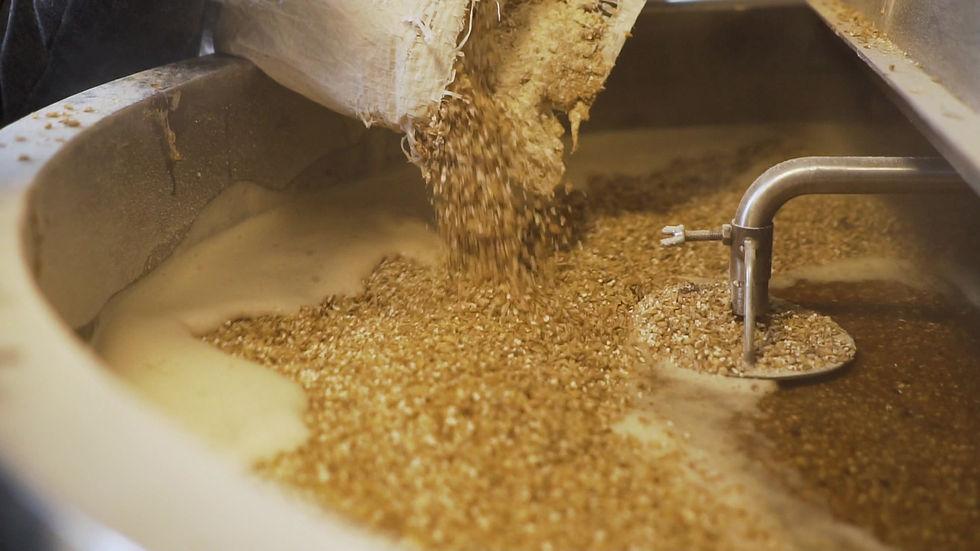
Xylanase in Animal Feed: Why Enzyme Selection Matters
Feed ingredients containing wheat, rye, barley, and other cereal grains can introduce significant levels of non-starch polysaccharides (NSPs), particularly arabinoxylans. These compounds can increase digesta viscosity, interfere with nutrient utilization, and reduce the efficiency with which animals extract value from the feed.
Xylanase is used to hydrolyze xylan-based NSPs and improve the accessibility of nutrients in cereal-based feed formulations. For commercial feed manufacturers, however, choosing a xylanase is not simply a matter of selecting the highest enzyme activity. Enzyme source, activity specification, thermal stability, application conditions, feed matrix, and processing method all affect practical performance.
This guide explains how xylanase works in animal feed, where it is commonly applied, and what formulation and procurement teams should evaluate before purchasing it in bulk.
What Is Xylanase?
Xylanase is a hydrolytic enzyme that breaks down xylan, a major structural polysaccharide found in plant cell walls. In animal feed, its primary role is to degrade xylan-containing NSPs that animals cannot efficiently digest on their own.
Xylan is particularly relevant in cereal grains used in poultry and swine diets. When xylan is partially degraded, the resulting reduction in NSP-related constraints can improve the physical environment of the gastrointestinal tract and increase access to nutrients encapsulated within plant cell structures.
The practical value of xylanase therefore comes from its interaction with the entire feed matrix, rather than from the enzyme acting as a conventional nutrient source.
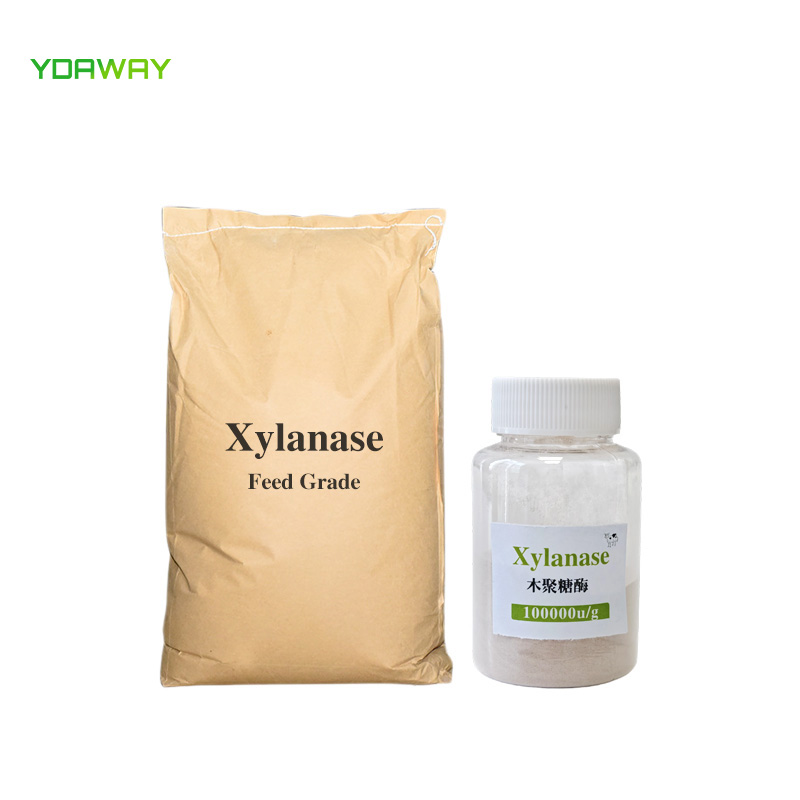
How Xylanase Works in Feed
The basic mechanism can be summarized as:
Xylan-containing feed ingredients → Xylanase hydrolysis → Smaller soluble fragments → Reduced NSP-related limitations → Improved nutrient accessibility
The actual response depends on the concentration and structure of xylan in the feed, enzyme activity, processing conditions, and animal species.
For manufacturers, this means that xylanase should be evaluated according to the formulation in which it will actually be used.
Key Functional Benefits of Xylanase in Animal Feed
Reducing NSP-Related Viscosity
One of the most important reasons for adding xylanase to cereal-based diets is its ability to break down xylan structures that contribute to intestinal viscosity.
Higher digesta viscosity can interfere with normal nutrient diffusion and digestion. By hydrolyzing xylan, xylanase can help reduce this physical limitation and create a more favorable environment for nutrient utilization.
Improving Nutrient Accessibility
Plant cell walls can physically limit access to starch, protein, and other nutrients contained within plant tissues.
Xylanase partially breaks down the structural matrix surrounding these nutrients, potentially making them more accessible to endogenous digestive processes.
This is particularly relevant when cereal-based ingredients represent a substantial proportion of the diet.
Supporting Feed Efficiency
When nutrient utilization improves, manufacturers may be able to formulate diets more efficiently.
The potential impact on feed conversion and production performance depends on the complete formulation, enzyme activity, animal species, feed quality, and other nutritional variables. Xylanase should therefore be evaluated as part of a broader feed enzyme strategy rather than as an isolated performance solution.
Improving the Value of Cereal-Based Ingredients
Xylanase can be particularly useful when diets contain ingredients with meaningful NSP concentrations.
Instead of evaluating wheat, wheat by-products, rye, barley, or similar materials only according to their nutrient composition, formulators can also consider how their NSP profile affects nutrient availability and whether enzyme supplementation can improve ingredient utilization.
Xylanase Applications by Feed Type
Xylanase is most relevant to formulations where cereal-derived xylan and arabinoxylans create nutritional or physical constraints.
Xylanase for Poultry Feed
Poultry diets frequently contain wheat, wheat by-products, corn, soybean meal, and other plant-derived ingredients.
In wheat-based or wheat-containing formulations, xylanase can help break down arabinoxylan structures and reduce the viscosity associated with soluble NSPs.
For poultry feed manufacturers, evaluation should consider:
- Cereal composition
- NSP concentration
- Feed processing conditions
- Target bird species and production stage
- Enzyme activity
- Stability during feed manufacturing
The objective is not simply to add an enzyme but to match enzyme functionality with the characteristics of the diet.
Xylanase for Swine Feed
Swine diets may also contain wheat, barley, wheat bran, and other cereal ingredients containing xylan-based NSPs.
Xylanase can be incorporated into these formulations to hydrolyze xylan structures and potentially improve nutrient accessibility.
For swine feed applications, the enzyme should be evaluated against the complete diet rather than against a single raw material because the response can vary with ingredient composition and processing conditions.
Xylanase in Other Cereal-Based Feed Formulations
The application of xylanase is not limited to one animal species.
It can be considered wherever cereal-derived xylan creates a meaningful formulation challenge. The commercial value of supplementation depends on the amount and type of substrate available to the enzyme and whether the enzyme remains sufficiently active under the relevant processing and gastrointestinal conditions.
What Determines Xylanase Performance?
Not all xylanase products perform identically under commercial feed conditions. Several technical parameters should be reviewed before selecting a product.
Enzyme Activity
Enzyme activity is one of the most important specifications when comparing xylanase products.
However, activity values are only meaningful when the unit definition and analytical method are clearly stated. Buyers should avoid comparing products based solely on numerical activity values when the suppliers use different assay conditions or definitions.
A proper technical specification should identify:
- Activity unit
- Assay method
- Test conditions
- Guaranteed minimum activity
- Recommended application range, where available
Thermal Stability
Feed enzymes may be exposed to elevated temperatures during feed processing, particularly during pelleting.
An enzyme with insufficient thermal stability may lose a significant portion of its activity before the finished feed reaches the animal.
For pelleted feed production, procurement teams should therefore request thermal stability or post-processing activity data under conditions relevant to their actual production process.
pH Stability
After feed consumption, an enzyme encounters changing pH conditions throughout the gastrointestinal tract.
The relevant question is not simply whether an enzyme is described as “pH stable,” but whether it retains sufficient activity across the pH conditions relevant to the intended application.
Substrate Specificity
Different xylanase preparations can differ in their activity characteristics and substrate preferences.
The xylan structure present in wheat, rye, barley, and other feed materials is not necessarily identical. Matching the enzyme to the actual raw-material profile can therefore be more useful than selecting a product solely according to its headline activity.
Xylanase and Feed Processing
Feed manufacturing conditions can significantly influence enzyme performance.
Pelleting
Pelleting exposes feed ingredients to heat, moisture, pressure, and mechanical stress.
For xylanase intended for pelleted feed, manufacturers should determine how much enzyme activity remains after processing rather than relying only on the activity measured in the unprocessed enzyme preparation.
Post-Pellet Application
In some production systems, enzymes can be applied after pelleting to reduce exposure to high processing temperatures.
This approach changes the technical requirements and production workflow, so the appropriate enzyme format should be discussed with the supplier based on the manufacturer’s equipment and process conditions.
Storage Stability
Even after processing, enzyme activity needs to remain sufficiently stable during storage.
Temperature, humidity, packaging, formulation matrix, and storage duration can all influence enzyme stability. Bulk buyers should therefore request storage and shelf-life information together with the product specification.
How to Select a Xylanase for Commercial Feed Production
A practical selection process should begin with the feed rather than the supplier’s product name.
Step 1: Analyze the Feed Matrix
Identify the main cereal ingredients and their inclusion rates.
Pay particular attention to wheat, rye, barley, wheat bran, and other raw materials that may contribute significant amounts of xylan-containing NSPs.
Step 2: Define the Processing Conditions
Determine whether the finished feed will be:
- Mash
- Pelleted
- Extruded
- Otherwise heat processed
The processing method directly affects the stability requirements of the enzyme.
Step 3: Establish the Required Activity
Compare enzyme activity using the same unit definition and assay methodology.
Avoid treating two activity numbers as directly equivalent unless the testing methods are comparable.
Step 4: Evaluate Stability
Request technical information covering:
- Thermal stability
- pH stability
- Storage stability
- Post-processing activity
- Compatibility with the intended feed matrix
Step 5: Conduct a Formulation-Level Evaluation
The final decision should be based on the complete formulation and production process.
A technically strong xylanase product is not necessarily the most appropriate choice if its stability or activity profile does not match the manufacturer’s feed system.
What to Check When Sourcing Feed-Grade Xylanase
For bulk procurement, a product datasheet should provide enough information for both technical and purchasing teams to evaluate the ingredient.
Technical Specification Checklist
Before placing an order, request:
- Enzyme name and source
- Guaranteed enzyme activity
- Activity unit definition
- Analytical method
- Physical form
- Carrier or formulation information, where applicable
- Moisture specification
- Recommended storage conditions
- Shelf life
- Thermal stability data
- pH stability information
- Post-processing activity data, when relevant
Quality and Documentation
For commercial feed production, buyers should also confirm the documentation required for their market.
Depending on the destination and application, this may include:
- Certificate of Analysis (COA)
- Product Specification Sheet
- Safety Data Sheet (SDS)
- Regulatory or compliance documentation
- Microbiological specifications
- Heavy metal or contaminant specifications
- Batch traceability documentation
The exact documentation requirements should be confirmed according to the destination market and applicable feed regulations.
Packaging and Bulk Supply
Packaging should match the buyer’s production scale and storage system.
For recurring commercial orders, procurement teams should evaluate more than the quoted price per kilogram. Consistency between batches, lead time, production capacity, packaging format, and supply continuity can have a greater impact on total procurement cost than a small difference in unit price.
Xylanase Supplier Evaluation Checklist
When comparing multiple suppliers, procurement teams can use the following checklist:
| Evaluation Factor | What to Check |
|---|---|
| Enzyme activity | Guaranteed activity and assay method |
| Thermal stability | Activity retention under actual processing conditions |
| pH stability | Performance across relevant pH conditions |
| Feed application | Suitability for poultry, swine, or other target feeds |
| Physical form | Powder, granule, or other applicable format |
| Quality documentation | COA, specification, SDS, and compliance documents |
| Batch consistency | Variation between production batches |
| Packaging | Compatibility with storage and production requirements |
| Supply capacity | Ability to support recurring bulk orders |
| Technical support | Formulation and application assistance |
| Customization | Ability to meet specific activity or formulation requirements |
A supplier that can provide both technical documentation and application support is generally more valuable than a supplier evaluated solely on price.
Xylanase vs. Multi-Enzyme Feed Strategies
Xylanase is often considered as part of a broader enzyme strategy rather than used in isolation.
Depending on the feed matrix, manufacturers may evaluate xylanase alongside enzymes such as phytase, protease, amylase, mannanase, or beta-glucanase.
The rationale is straightforward: different enzymes target different substrates.
However, enzyme combinations should not be selected simply because a product contains more enzyme types. Each additional enzyme should have a clear formulation purpose, and compatibility, activity levels, processing stability, and cost should be evaluated together.
Common Mistakes When Purchasing Xylanase
Comparing Activity Numbers Without Checking the Assay
A higher numerical activity does not automatically mean a more effective product if the activity units or analytical methods differ.
Always compare products using equivalent testing methods.
Ignoring Feed Processing Conditions
An enzyme may perform well in laboratory conditions but lose substantial activity during commercial pelleting.
Processing stability should therefore be part of the supplier evaluation.
Choosing Based Only on Price per Kilogram
The cheapest product is not necessarily the lowest-cost solution.
A more useful commercial comparison considers:
Cost per unit of effective enzyme activity + processing stability + application performance + supply consistency.
Using the Same Enzyme Strategy for Every Feed
The ideal enzyme approach depends on the raw-material matrix, animal species, processing conditions, and nutritional objectives.
A formulation-specific evaluation is more reliable than applying one standard dosage or product to every feed.
Conclusion
Xylanase is a valuable feed enzyme for formulations containing cereal-derived xylan and other NSPs. By hydrolyzing xylan structures, it can help reduce NSP-related viscosity and improve the accessibility of nutrients within plant-based feed materials.
For commercial feed manufacturers, however, enzyme selection should be based on activity, assay methodology, substrate profile, thermal stability, pH stability, processing conditions, and total formulation economics—not simply the price or headline activity value.
Sunway’s feed additive portfolio includes xylanase and other enzyme preparations, supporting manufacturers evaluating enzyme solutions for commercial feed applications.
For bulk sourcing, procurement teams can request a detailed xylanase specification, activity information, stability data, and application support to determine whether a product is appropriate for their specific feed matrix and manufacturing process.